Australia Turnitin AI Detection Policy 2026: Student Guide

Short answer: Australian universities run Turnitin broadly, but the AI writing detection module is switched on or off at institution and instructor level — and Curtin University removed it entirely in January 2026, framing the change as "fostering trust and clarity within a modern academic culture." Turnitin's Learning Integrity Insights Report (July 2026) puts Australia's rate of submissions flagged above 80% AI at 10.2%, close to the UK's 9.8% and far below the US's 19.4%. Australian students are on the eligible-country list for one free check at InDetect, our service, so you can see the real report before you submit. Here's who's running what, how appeals work down under, and why the false-positive risk is higher if English isn't your first language.
A note on authorship. Straight talk before the policy table: InDetect is ours, a third-party pre-submission checker that runs your paper through authorized instructor-level Turnitin accounts. We're not Turnitin, and we sell the service recommended in section 5 — weigh that as you read. The policy facts here come from Turnitin's published report, university announcements and the Stanford-led study cited inline, so you can check them yourself.
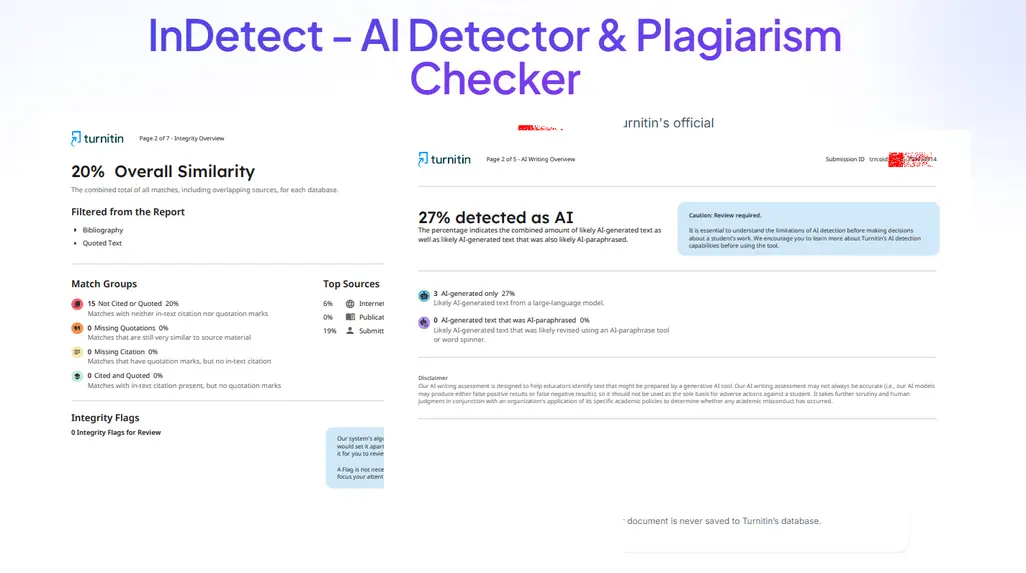
Key Takeaways
Turnitin is standard across Australian higher education, but the AI module is a per-institution, per-instructor setting — there's no single "Australia policy."
Australia's flagged rate (10.2% of submissions above 80% AI) tracks the UK (9.8%), not the US (19.4%), per Turnitin's July 2026 report.
Curtin University disabled Turnitin AI detection university-wide in January 2026; other institutions restrict it.
Australian misconduct processes let you appeal, and an AI score alone shouldn't be the basis for a penalty.
Non-native English speakers face a documented false-positive problem — 61.22% of flagged essays in one Stanford-led study were misclassified — which makes pre-submission checking worthwhile.
1. Turnitin Adoption Across Australia: Scale and Country-Level Data
Turnitin reports more than 16,000 institutions worldwide, and Australian universities have been part of that footprint for years — similarity checking is standard infrastructure here. The AI writing detector is the newer layer, and adoption is uneven: the institution enables it, then each instructor decides whether it runs on their assignments.
Turnitin's Learning Integrity Insights Report, published in July 2026 and covering submissions from October 2025 to April 2026 (more than 33 million US submissions, with Australia broken out separately), gives the cleanest country-level picture we have. In Australia, 10.2% of submissions came back with an AI score above 80%. The UK sat at 9.8%; the US at 19.4%.
Don't misread the metric. It's the share of submissions that hit the detector's top band — not the share of essays actually written by AI. Detectors put human writing in the top band too, which is section 4's problem. What the Australia–US gap does suggest is that flagged rates aren't only about how much AI students use; they're also about how institutions configure and act on the tool.
For the same report's UK picture and the process differences there, our UK university guide goes deeper.
2. Which Australian Universities Have Disabled or Restricted AI Detection
The clearest case is Curtin. In January 2026 it turned off Turnitin's AI detection across the university, describing the move as "fostering trust and clarity within a modern academic culture." The University of Queensland also appears on our running list of institutions that have disabled or restricted the module — every confirmed case, with sources, is tracked in universities that disabled Turnitin AI detection.
Beyond those named cases, positions vary school by school, and we verified only what official pages support as of October 2026:
The University of Melbourne publishes guidance on AI detection in student assessment.
The University of Sydney's academic integrity pages describe how Turnitin is used.
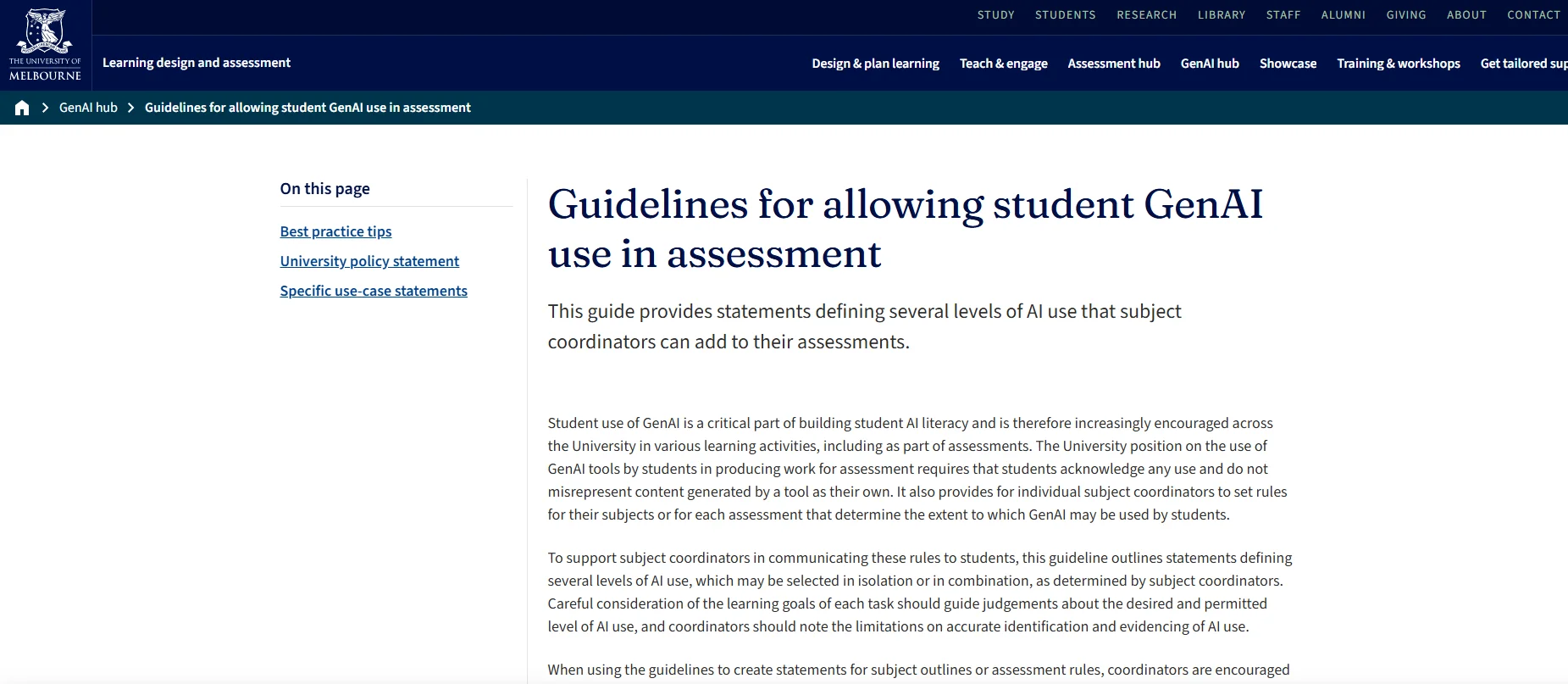
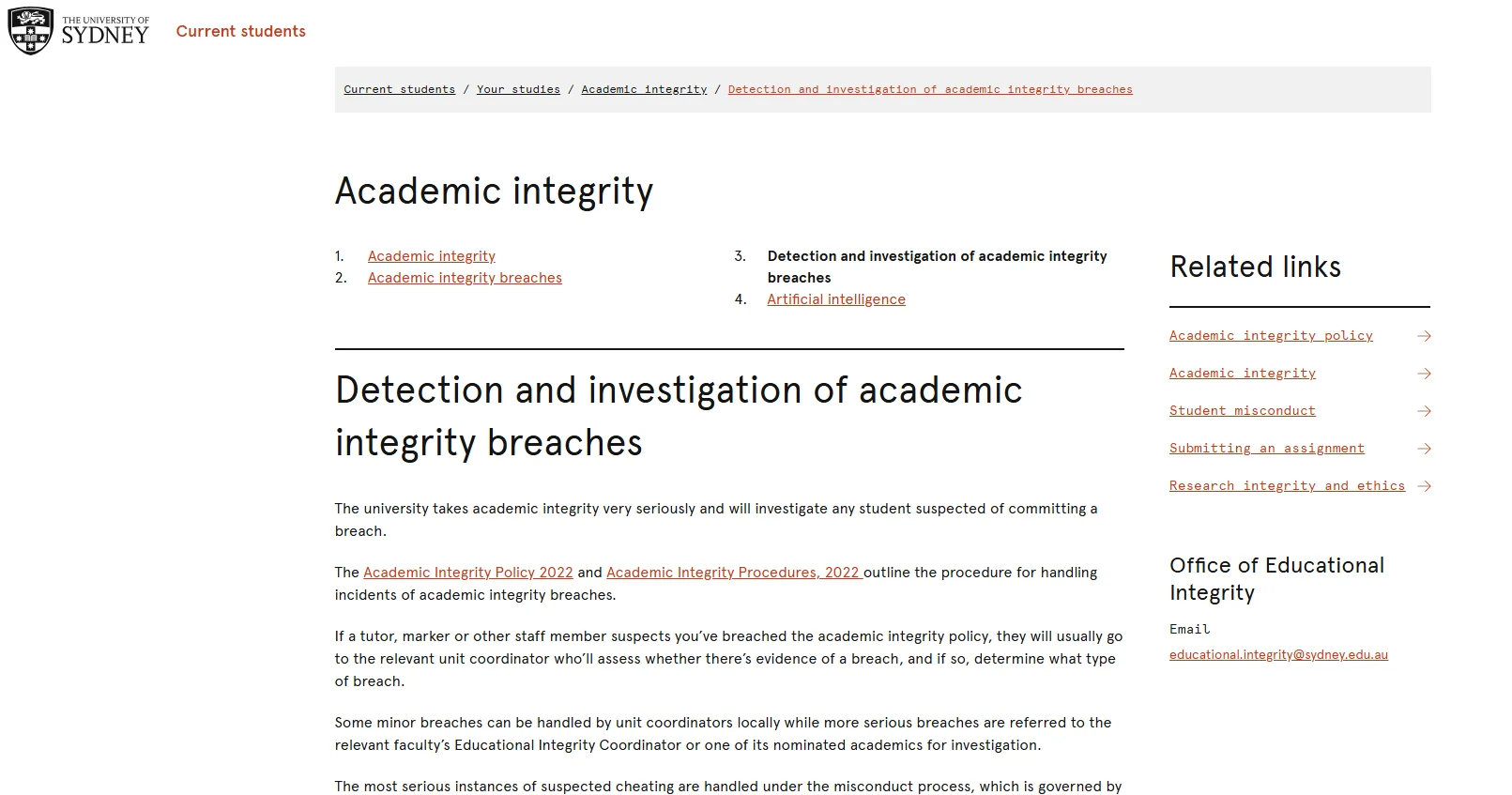
If your university isn't named anywhere, assume nothing. The module's on/off state for your specific assignment is set by your course coordinator, and it can change between semesters. Ask in writing before you rely on it.
3. How Australian Academic Misconduct Appeals Differ from the US and UK
Australia's default response to a suspected-AI assignment is an institutional process, not an automatic penalty. The typical sequence: your report is reviewed as one piece of evidence, you get a chance to respond — often a meeting or a written statement — and outcomes are decided under your university's student misconduct procedure. If you disagree with the finding, you can appeal internally. If internal channels are exhausted, ombudsman review is available for complaints about public universities.
Two things to hold onto. First, the mainstream policy position across Australian institutions is that an AI score cannot be the sole basis for a misconduct finding — it's evidence to investigate, not a verdict. Second, the appeal route exists and students do get cases resolved at the "explain your process" stage: dated drafts, version history and notes are your best defence.
The US contrast is stark. American campuses have seen lawsuits over AI-based accusations and suspensions, and our guide to Turnitin AI detection in US schools covers that record alongside the country-level data. Australia argues less in court and more through administrative review — which is precisely why documenting your writing matters before a flag, not after.
4. Why International Students in Australia Face Higher False-Positive Risk
Australia hosts one of the world's largest international student populations, and that matters for AI detection because the tools are measurably less reliable for non-native English writers. The Stanford-led study by Liang et al. (published in Patterns, 2023) examined essays by non-native speakers across seven universities; of the papers flagged by Turnitin's detector, 61.22% were misclassified — human writing scored as AI.
The mechanism has a simple cause. Detectors learn "AI-like" from polished, grammatical, formulaic prose. Clean academic English written by a careful non-native speaker looks a lot like that. Formulaic structure — standard linking phrases, rigid five-paragraph shape — raises the risk further.
If English isn't your first language, two habits cut your exposure. Keep a visible writing trail: drafts with timestamps, version history, your outline. And consider seeing the real report before you submit, knowing Turnitin discloses a ±15-point error margin. Guessing whether you'll flag is worse than knowing. US community college students face the same bias from a different direction — our community college guide breaks down where template essays get flagged.
5. How Australian Students Can Pre-Check with a Real Turnitin Report
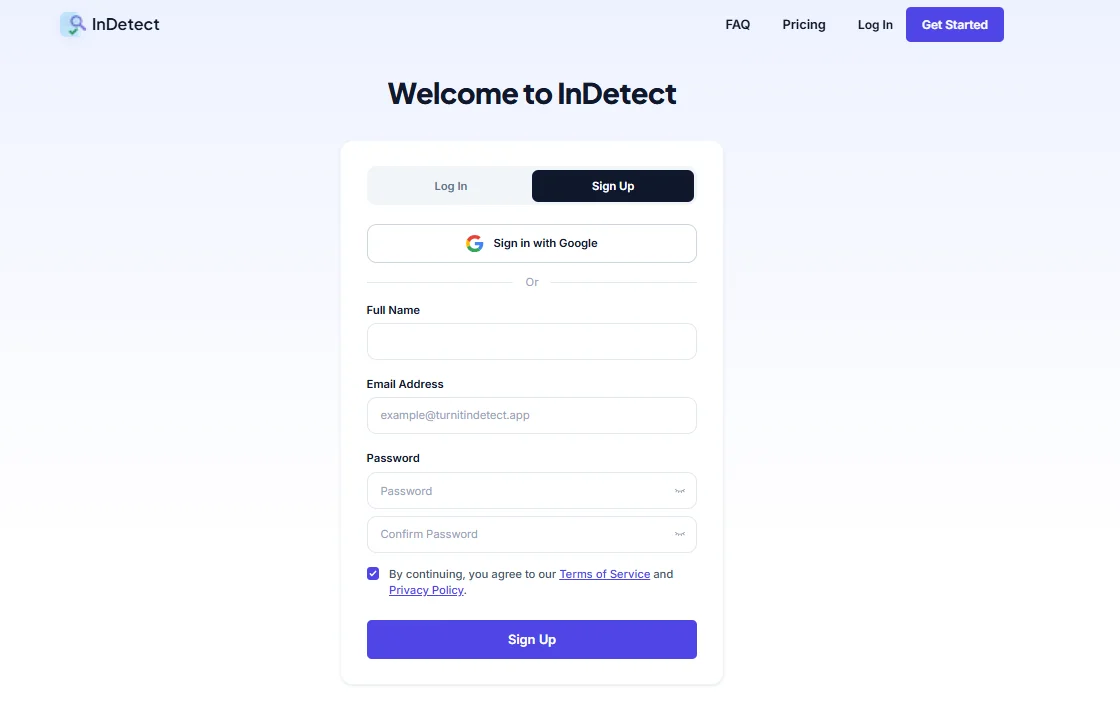
Turnitin doesn't offer students a self-serve preview — no personal accounts, no uploads without a class. The real-engine option is a service that routes your paper through an authorized instructor account, which is what InDetect does.
Australia is on the eligible-country list, so you get one free check for eligible new users (availability depends on your country at signup). Upload a PDF or DOCX; the paper runs through the real Turnitin engine in zero-repository mode, so it won't match itself when you submit; your similarity + AI report returns in 5–30 minutes; and both the paper and the report are deleted within 24 hours.
If you need more checks, pricing is subscription-only: Lite is $9/month for 2 checks ($4.50 each), Pro is $19/month for 6 ($3.17 each), Ultra is $39/month for 20 ($1.95 each). Annual billing saves about 40%. Every check includes both reports. If you're an international student studying in Australia, eligibility is determined at signup from your registration details — your signup page will show whether the free check is available to you.
6. FAQ: Turnitin AI Detection in Australia
Does Australia use Turnitin AI detection? Yes, widely — but the AI writing module is enabled per institution and often per instructor, so whether it runs on your assignment is a course-level question. Ask your coordinator before you assume either way.
Which Australian universities turned off Turnitin AI? Curtin University disabled it university-wide in January 2026, citing "fostering trust and clarity within a modern academic culture." The University of Queensland appears on the same disabled-or-restricted list. Our running record tracks confirmed cases with sources.
Can international students in Australia check Turnitin AI for free? Eligibility is set at signup by your registration country, and Australia is on the eligible list — one free check for new users if your signup page shows it available. Otherwise Lite is $9/month for two checks.
What to do if a Turnitin AI score flags my Australian assignment? Treat it as a prompt, not a verdict. Turnitin discloses a ±15-point error margin; gather your drafts and version history; respond through your university's process. An AI score alone shouldn't decide a misconduct finding.
Will a third-party check save my essay to the Turnitin database? Not if the account is configured for zero repository storage — that's how InDetect runs. The paper isn't added to Turnitin's database, and we delete the paper and report within 24 hours.
7. Know Your Score Before the Deadline
Australia's mix of broad Turnitin access, per-instructor settings and a real appeals route means you have room to defend your work — if you document it. Keep dated drafts, ask your coordinator whether the AI module runs on your assignment, and use the free check if you're eligible: one real report at InDetect, or Lite at $9/month for two if you've got a semester's worth of essays.