Turnitin AI Detection Lawsuit Tracker: Student Cases 2026

Last updated: October 25, 2026. We re-check court dockets and the named news reports every quarter.
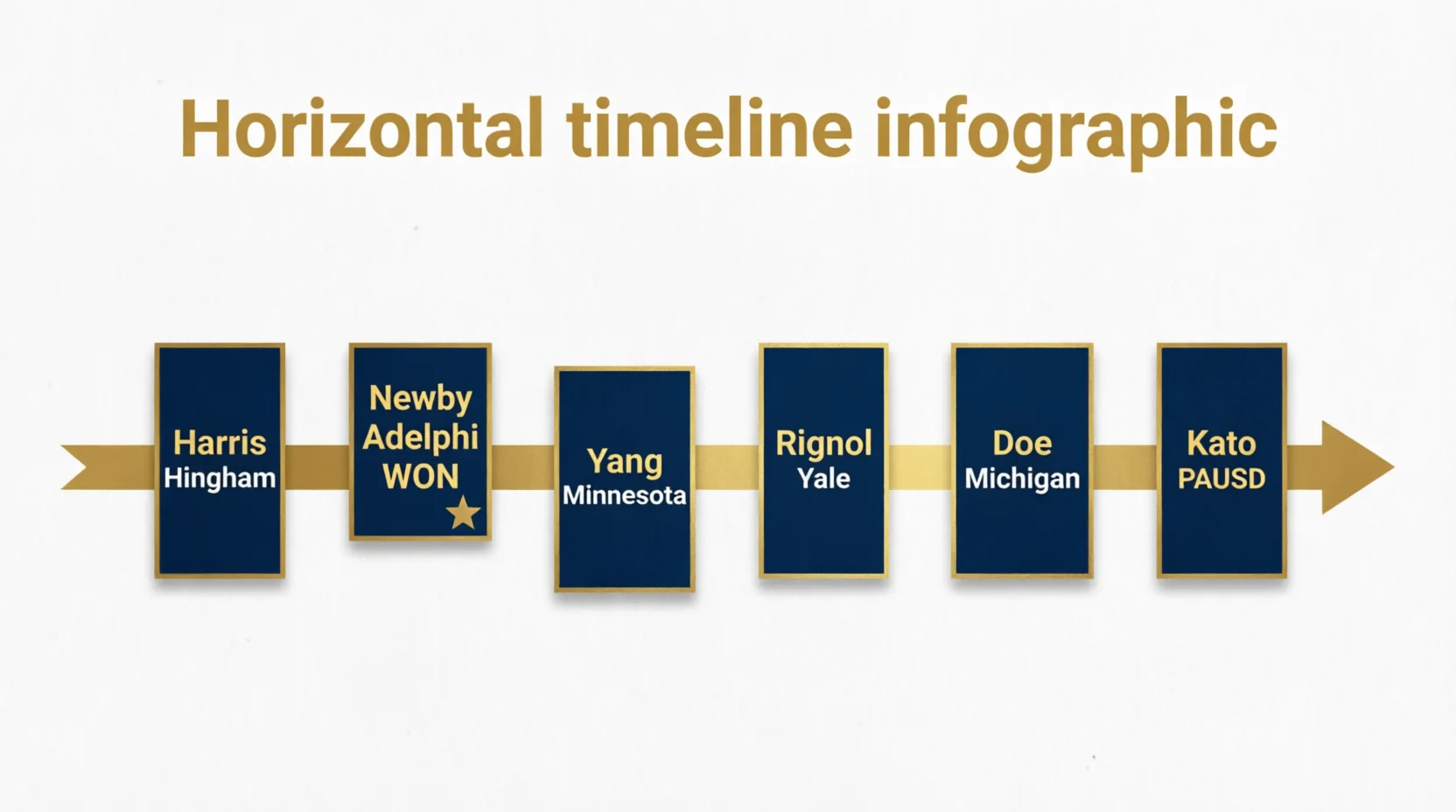
Direct answer — as of October 2026, at least six US students or their families have filed formal lawsuits over AI-detection discipline: one student win (Newby v. Adelphi, decided January 28, 2026), two school-side wins, one voluntary dismissal (Kato v. PAUSD, dropped September 2, 2026, per the Palo Alto Daily Post's September 5 report), and two still pending. No court has ruled that Turnitin — or any AI detector — is unlawful. Every decision so far turns on due process: whether the school held a fair hearing, weighed counter-evidence, and followed its own procedures.
A note on authorship. This tracker is written by the team behind InDetect, a third-party pre-submission checker that runs the real Turnitin engine through authorized instructor accounts. We're not a neutral legal observer — students who take AI flags seriously are our customers. That's why every case row below carries a source and a verification date.
Key Takeaways
Six formal lawsuits, verified October 25, 2026: 1 student win, 2 school-side wins, 1 dropped by the family, 2 pending.
Newby v. Adelphi is the only outright student win: a New York court vacated the finding and ordered the record expunged because the school skipped its own process.
Kato v. PAUSD shows the limits of inside-the-system appeals: 1,162 pages of Google Docs revision history didn't overturn a 76% flag; the family sued, then dropped the case with no disclosed reason or settlement terms.
Courts are ruling on procedure, not science. No decision has declared AI detectors legal or illegal.
The litigation already changed policy: at most US schools an AI score alone can't be the sole basis for discipline.
1. The Case Board at a Glance
The full board, verified October 25, 2026 against the sources in each row.
| Case | Court | Filed | Status / outcome | Detector | Source, verified |
|---|---|---|---|---|---|
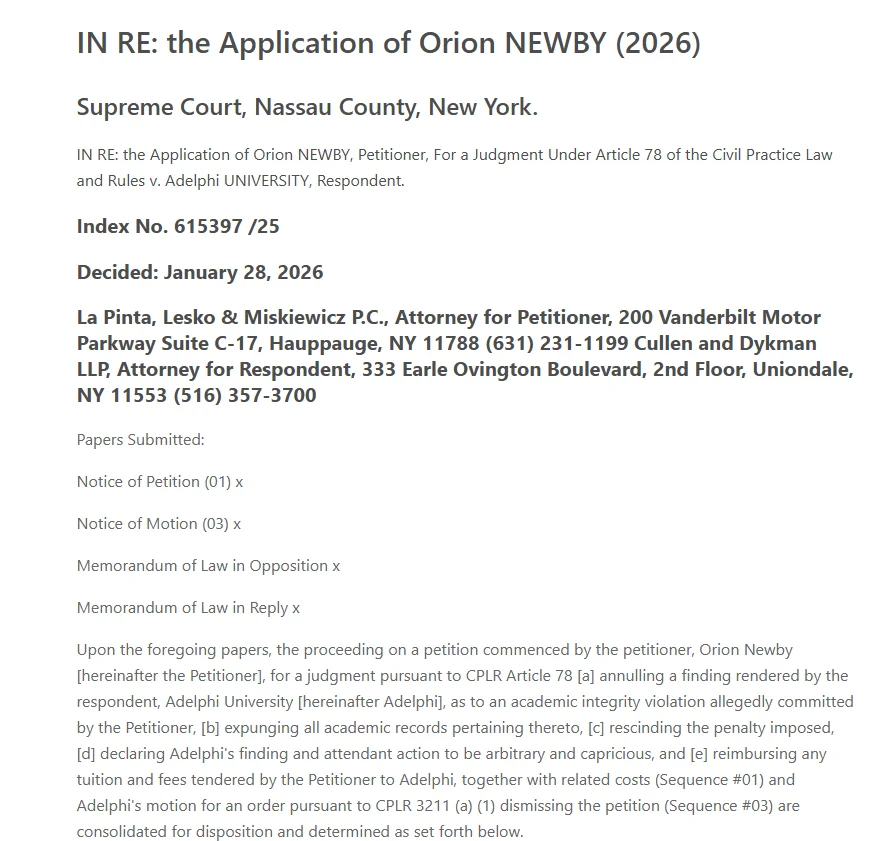
| Newby v. Adelphi University | NY Supreme Court, Article 78 (Index No. 615397/25) | Jul 2025 | Decided Jan 28, 2026 — student win. Finding vacated, record expunged | Turnitin (100% AI flag) | Newsday; FindLaw decision — Oct 25, 2026 |
| Harris (RNH) v. Hingham Public Schools | D. Mass. | Sep 2024 | School-side win. Injunction denied; case continuing | Instructor judgment (no detector named) | Public docket — Oct 25, 2026 |
| Yang v. University of Minnesota | State appellate + D. Minn. | 2025 | School-side win. Expulsion upheld | GPTZero + instructor judgment | Public docket — Oct 25, 2026 |
| Rignol v. Yale University | D. Conn. | Feb 2025 | Pending. Injunction denied | GPTZero | Public docket — Oct 25, 2026 |
| Doe v. University of Michigan | E.D. Mich. | Feb 2026 | Pending. Injunction denied | Not disclosed | Public docket — Oct 25, 2026 |
| Kato v. Palo Alto USD | N.D. Cal. | May 2026 | Dropped Sep 2, 2026 by the family | Turnitin (76% AI flag) | Palo Alto Daily Post (Sep 5); Palo Alto Online — Oct 25, 2026 |
Two things stand out: only two of the six cases involved a Turnitin flag, and the two school-side wins weren't endorsements of detectors — just rulings that those schools handled their procedures well enough.
2. Newby v. Adelphi: The First Student Win
Orion Newby, an autistic freshman in Adelphi's support program, had his world-civilizations paper flagged 100% AI by Turnitin. He brought counter-evidence, not just denials: Grammarly's and ZeroGPT's detectors both classified the paper as human-written, plus drafts and testimony from the counselor the school itself assigned him. Adelphi upheld the finding anyway.
Newby took the case to New York state court under Article 78, the procedure for challenging an official body's decision. On January 28, 2026, the judge ruled for the student: per Newsday's coverage, the court found the accusations "completely false," vacated the disciplinary finding, and ordered the record destroyed. The core criticism wasn't detector science — it was that Adelphi skipped its own written disciplinary steps and never gave Newby a genuine appeal.
It's the closest thing to a precedent students have — a state procedural ruling, not a federal holding about AI detection.
3. Kato v. PAUSD: The 1,162-Page Evidence Packet
A Palo Alto 10th grader wrote an English essay on The Crucible. Turnitin flagged it 76% AI. The teacher required a supervised in-class rewrite; the grade dropped from the A/B range to a C. The parents submitted 1,162 pages of Google Docs revision history showing the essay built up over days of incremental writing. The district still refused to restore the grade.
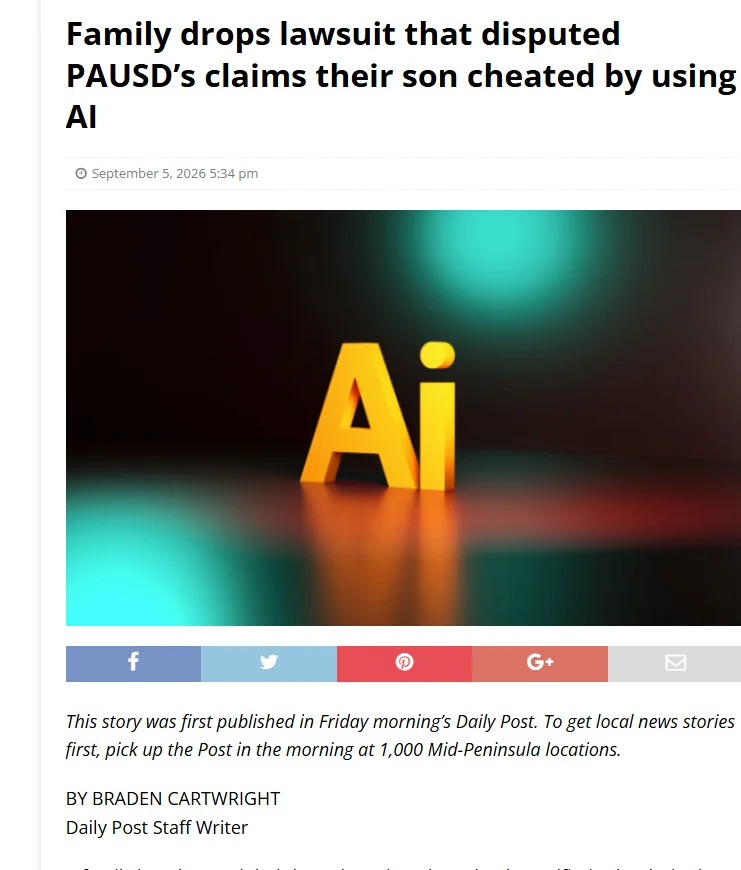
In May 2026 the family sued the Palo Alto Unified School District in federal court (N.D. Cal.), reported by Palo Alto Online as a civil-rights action under Titles VI and IX, with a $150 million damages claim in the coverage. On September 2, 2026, the family dropped the lawsuit, per the Palo Alto Daily Post. Neither the reason nor any settlement terms were publicly disclosed, and we won't speculate.
The lesson is brutal and practical: even a thousand pages of evidence couldn't overturn the flag inside the district's own process. Evidence works best before an accusation, not after. Our guide to Turnitin AI detection on AP essays covers what these flags look like at the high-school level.
4. The Other Four Cases and What They Decided
Harris v. Hingham Public Schools (D. Mass., filed Sep 2024). The court denied the family's injunction request; the case continues. The discipline rested on a teacher's judgment, not a detector score. Lesson: federal courts move slowly, and emergency relief is rare.
Yang v. University of Minnesota (2025). GPTZero flagged the work, the instructor agreed, the student was expelled. Both the state appellate and federal courts sided with the school. Lesson: when a university documents a real hearing and weighs the student's response, the finding survives review — even when the detector is a third party's.
Rignol v. Yale University (D. Conn., filed Feb 2025). Injunction denied; still pending. The irony: Yale itself disabled institutional AI detection in 2025, part of the withdrawal wave tracked in our list of universities that disabled Turnitin AI.
Doe v. University of Michigan (E.D. Mich., filed Feb 2026). Injunction denied; pending. The filings don't name the detector. Michigan's 2026 policy statement — that AI detection "cannot provide definitive proof of cheating" — is now part of the record either way.
5. What Courts Are Actually Ruling On
Read the decisions and the pattern is unmistakable: no court has ruled on whether AI detectors are lawful, accurate, or admissible in general. Every case turned on procedure — hearing quality, counter-evidence weighed, the school's own handbook followed. The science is still outrunning the law.
The litigation changed policy anyway. Most US schools that updated their integrity rules after 2025 include four elements: an AI score can't be the sole basis for discipline; it must be corroborated by other evidence (drafts, version history, oral explanation); a formal appeal channel must exist; and instructors get training on detector limits. Turnitin itself conceded the point in February 2026, announcing a shift "from detection to transparency" with tools that show how a document evolved rather than only a final score.
One technical detail matters in any appeal: Turnitin hides exact percentages below 20% and shows them as *% — the company's own admission that the low band is unreliable. Our explainer on what the asterisk score means breaks down the report you're disputing. For the wider adoption picture, see our data page on Turnitin AI detection in US schools.
6. If You Got Flagged Today: What These Lawsuits Teach You
The winning playbook from Newby, and the losing ones from Yang and Kato, point at the same list. Build it now, not after the hearing:
Export the full version history (Google Docs → File → Version history → Name all versions, then download). This is what the Kato family needed 1,162 pages of.
Keep dated drafts, outlines, and notes. Timestamps beat assertions.
Log every tool you used — Grammarly, ChatGPT brainstorming, a tutor — with dates and purpose.
Request the actual report. Which sentences flagged, which databases. A school that won't show it is building a weak record for itself.
Get the written procedure and follow it exactly. Newby won because Adelphi didn't.
Offer a supervised rewrite or oral retelling before they demand one.
Appeal in writing, citing the school's own policy language.
And prevention, which is the honest reason we exist: a pre-submission check through InDetect runs your paper through the real Turnitin engine via authorized instructor accounts. We're not affiliated with Turnitin, nothing goes into a repository (so your paper can't match itself at submission), and paper and report are deleted within 24 hours. Reports take 5–30 minutes, never instant. It's not legal relief — it's the cheapest preventive evidence there is: you'll know whether the report reads 4% or 74% before the deadline decides. One free check for eligible new users (availability depends on your country), or Lite at $9/month for 2 checks.
7. FAQ: Student Lawsuits Over AI Detection
Has anyone sued Turnitin for false AI accusations? Not Turnitin itself, so far. All six tracked cases name the school or district that issued the discipline, not Turnitin as a defendant.
Did the student win in Newby v. Adelphi? Yes. On January 28, 2026, a New York state court vacated the academic-integrity finding, called the accusations "completely false," and ordered the record destroyed. The ruling was procedural: Adelphi failed to follow its own process.
Can I sue my school for a Turnitin AI false flag? You can, but the record shows courts review procedure, not detector science. Two students lost where the school documented a fair process; one won where it didn't. Whether your facts fit is a question for a lawyer — your evidence packet is the variable you control.
What evidence proves my paper wasn't written by AI? Version history, dated drafts and notes, a tool-use log, and a willing oral retelling. Counter-reports from other detectors helped Newby. The Kato family's revision history still couldn't flip the decision inside the district — timing matters more than volume.
Are courts saying Turnitin AI detection is unreliable? No court has ruled on the technology's reliability at all. Decisions went for and against schools based on hearings, appeals, and evidence — not the detector itself.
8. Cases to Watch
We re-check dockets and reporting every quarter; the next pass is January 2027. Pending: Rignol v. Yale and Doe v. Michigan, plus the continuing Harris case. If either reaches detector science rather than procedure, we'll update this board and flag it at the top.
The pattern across six cases: schools that follow their own rules win, and students with a documented process win. Start your evidence folder today — and before your next deadline, see the real number first. One free check for eligible new users (availability depends on your country), or Lite at $9/month for 2 checks.