High School AP Essay Turnitin AI Detection: A Parent Guide

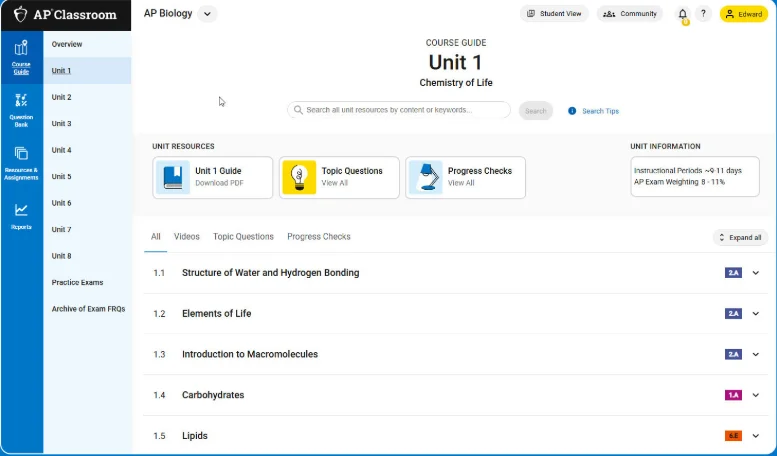
Short answer: AP Classroom does not run Turnitin AI detection. The College Board scores AP exam free-response questions by hand, and no AI percentage ever appears next to an FRQ. The real risk sits somewhere else: most U.S. high schools run AP and IB coursework through their own Turnitin account, AI writing panel included. And when that panel is wrong about a 16-year-old, the appeal rarely works. In the Kato family's dispute with the Palo Alto Unified School District, a 10th grader flagged at 76% AI kept the finding even after producing 1,162 pages of Google Docs revision history. If your child writes their own essays, a pre-submission check is the only reliable defense.
A note on authorship. This article is written by the team behind InDetect. We operate a third-party pre-submission Turnitin check service, so we are not a neutral observer of the AI-detection debate — we discuss our own product in section 4. Every statistic and case here comes from public reporting or Turnitin's own disclosures, and we point to the source inline so you can check it yourself.
Key Takeaways
AP exam free-response questions are hand-scored by College Board readers. AP Classroom shows no Turnitin AI score.
Your child's school runs its own Turnitin subscription on AP and IB coursework — that's where the AI panel appears.
The five-paragraph essay, the default genre in most high schools, is exactly the kind of formulaic writing detectors false-flag most often.
High school appeals have far fewer procedural protections than university integrity hearings, which is why false flags are so hard to overturn.
A real Turnitin preview before submission — one that stores nothing — gives you the number before the number becomes an accusation.
1. Does Turnitin Check AP Essays? Separating the Two Systems
The search term "high school AP essay Turnitin AI detection" mixes up two systems that have nothing to do with each other. Untangling them is the first thing every AP student and parent should do.
System one is the College Board. AP exam free-response questions — the DBQ in U.S. History, the argument essay in Language — are scored by trained human readers working from published rubrics. The College Board does not run student responses through Turnitin's AI writing detector, and AP Classroom does not display an AI percentage on exam work. Anyone selling you a tool that "beats the AP scorer's AI check" is inventing a feature that doesn't exist.
System two is your child's school. Turnitin licenses to districts and independent schools directly, and teachers decide what runs through it. Most AP and IB programs route homework, practice essays, and portfolio drafts through a school Turnitin class — and that report does include the AI writing indicator.
So the honest answer to "does Turnitin check AP essays" is: not the exam, but very likely the practice essay due Friday. Parents should ask each teacher two questions — does this assignment go through Turnitin, and is the AI writing report enabled?
2. How High Schools Actually Use Turnitin AI on AP and IB Assignments
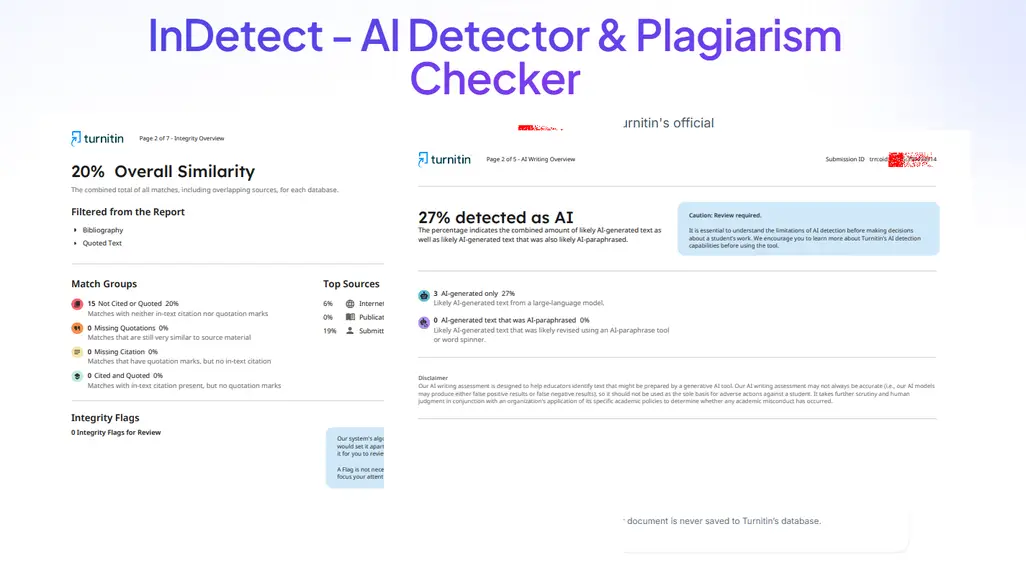
The setup is simple. A teacher creates a class inside the school's Turnitin account. Students upload a DOCX or PDF. The teacher receives a similarity report plus an AI writing report showing the percentage of the submission the model judges likely AI-generated, with flagged passages.
One technical detail matters here: Turnitin's AI indicator needs a minimum amount of text to produce a score. Very short responses often return no AI score at all, which is why teachers apply it to full essays rather than exit tickets.
Now the part that catches students. The five-paragraph essay is the default form of American high school writing, and it is the single most detector-hostile structure a student can submit. Formulaic topic sentences, predictable transitions, symmetrical body paragraphs — that regularity is exactly what a statistical model reads as "machine-like." IB students aren't exempt either; the extended essay and TOK response reward the same structured conventions.
This isn't a high-school-only problem. Nursing care plans run on fixed templates and get flagged at similar rates — we break that down in our nursing school Turnitin AI check guide. The pattern is the same wherever schools teach one template: the more uniform the training data, the more false positives the detector produces.
3. Why High School False Flags Are Harder to Overturn
At the university level, an integrity accusation triggers a formal process: a hearing, an advisor, written evidence rules. High schools mostly don't have that machinery. A flagged essay becomes a conversation between one teacher and one 15-year-old, with the teacher holding both the report and the discretion.
The numbers back this up. A Washington Post test of AI detection in high school settings found roughly 50% of flagged student papers were false accusations — writing that was genuinely the student's own.
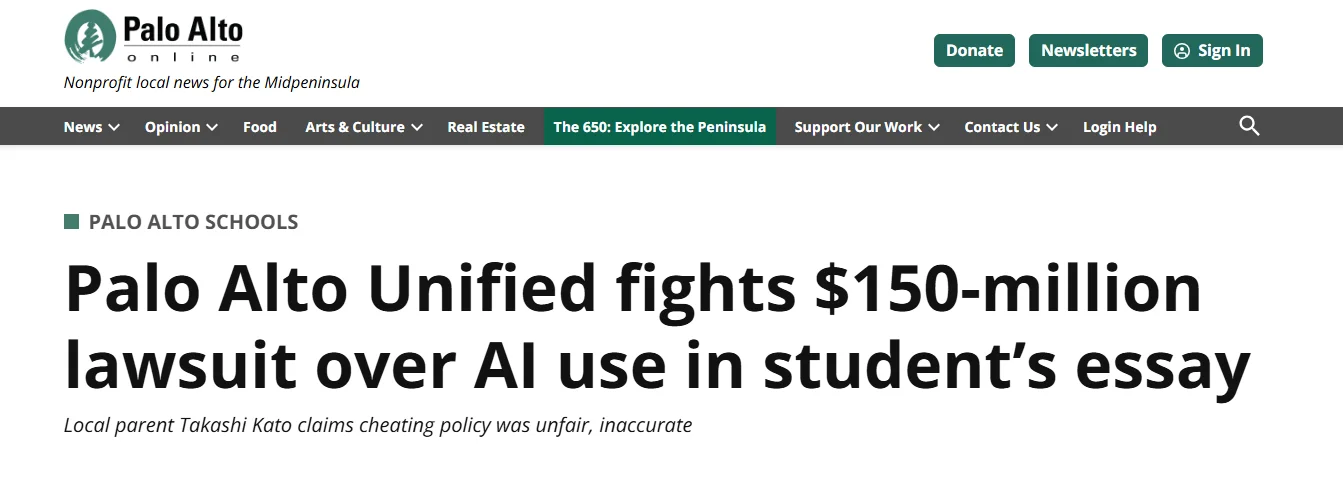
The Kato family learned what happens when that 50% lands on your child. A 10th grader in the Palo Alto Unified School District was marked 76% AI-generated on an essay she wrote herself. Her parents compiled 1,162 pages of Google Docs revision history — keystroke-level proof of the paper being written over days. The district did not reverse the finding, and the family sued. We cover the lawsuit and what it changed in our roundup of Turnitin AI detection lawsuits.
3.1 What the K-12 Data Says
Turnitin's own July 2026 report puts the irony in numbers. In U.S. K-12 schools, only about 5–6% of submissions scored above 80% AI. At universities, the figure was 19.4%.
Read that carefully. Heavy, real AI use is far rarer in high schools than on college campuses. Which means a larger share of the flags landing on high schoolers are false ones. Your child is statistically more likely to be accused wrongly than to be guilty. For broader context on how schools adopted these tools, see our guide to Turnitin AI detection in U.S. schools.
4. Pre-Submission Self-Check for AP and IB Students
Here is the practical move, and it's the reason this article exists: get the real report before the teacher does.
InDetect runs papers through the actual Turnitin engine via authorized instructor accounts configured for zero repository storage. Zero repository means your child's essay is never added to Turnitin's database, so it can't match itself when the real submission happens. Both the paper and the report are deleted within 24 hours. For a household worried about a minor's unpublished work sitting on someone's server, that's the part to check before paying anyone.
The workflow: upload the finished draft, wait 5–30 minutes for the report (it's a queued document check, not an instant paste-box), and read both numbers — similarity and AI writing. If the AI panel flags the introduction and conclusion, rewrite those passages and re-run. If the score is clean, submit with confidence.
For parents doing the cost math: the United States is on the eligibility list, so an eligible new user gets one free check (availability depends on your country). After that, the Lite plan is $9 per month for 2 checks — $4.50 per essay. The honest comparison isn't "is $9 a lot." It's $4.50 against a failing grade, an integrity conference, and a Kato-style fight you probably can't win.
5. If You or Your Child Got Flagged: The Evidence Checklist
The flag already happened. Now what? The lesson from every contested case is that one document doesn't overturn anything — a stack of independent evidence might.
Assemble all of it, in writing, before the meeting:
Drafts with dates. Every intermediate version, timestamped.
Google Docs version history. Export it to PDF; the Kato family's 1,162-page export is the reference example of doing this thoroughly.
Notes and outlines. Handwritten notes with dates are strong evidence of process.
Research trail. The actual sources read, browser history, annotated PDFs.
A verbal walkthrough. Can your child explain, unprompted, why each paragraph goes where it does? Practice this before any meeting.
The full report itself. Ask for the complete similarity and AI report, not a screenshot of the percentage.
No single item wins an appeal. Together they tell a story a detector score can't contradict — and if the school won't listen anyway, you'll at least know exactly what evidence you have.
6. FAQ: AP Essays, Turnitin, and AI Detection
Does Turnitin check AP essays?
Not on the AP exam — College Board readers score free-response questions by hand. But your school very likely runs AP and IB coursework through its own Turnitin subscription, AI panel included. Ask each teacher which assignments go through Turnitin.
Does AP Classroom show a Turnitin AI score?
No. AP Classroom is a College Board platform for the school's own assignment workflow; it does not generate Turnitin AI reports. Any AI score your child receives comes from the school's Turnitin class, not from the College Board.
Can a high school student check Turnitin AI before submitting?
Yes, through a third-party service that routes the paper through an instructor-level Turnitin account. InDetect offers one free check for eligible new users (availability depends on your country; the U.S. is on the list), then paid plans from $9/month. Reports take 5–30 minutes.
My child wrote the essay themselves but Turnitin says it's AI — what now?
Don't argue from one screenshot. Export the Google Docs version history, gather dated drafts and notes, and request the full report. Present the evidence stack in writing. False flags are common at the high school level, but overturning them takes documentation, not indignation.
Does a third-party Turnitin check save my child's essay?
Only if the service uses zero repository storage. A sloppy check that files the paper in Turnitin's database makes the real submission match itself at 100%. Our guide to pre-submission checks for theses walks through the repository trap in detail — the same rule protects a 10th grader.
7. The One Move That Costs Less Than the Fight
You can't control whether your child's teacher turns on the AI panel, and you can't make a high school appeal process more rigorous than it is. You can control one thing: whether your child walks into submission blind.
Run the essay through a real Turnitin preview before the deadline. Fix what the report flags, keep the clean copy, and keep your drafts. If you're in the U.S., claim the one free check for eligible new users; if you're not, Lite is $9/month for 2 checks — $4.50 per essay. It's the cheapest version of the Kato family's 1,162-page defense there is.