Nursing School Paper Turnitin AI Check: Why Scores Run High

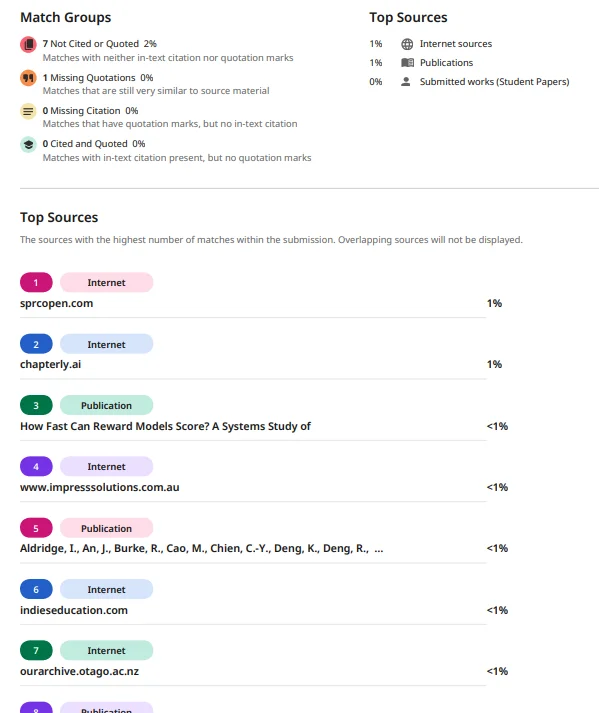
If your nursing paper comes back with an ugly Turnitin score, it's probably structure, not cheating. Two mechanical things work against you: APA citations, quotations, and reference lists inflate the similarity number, while care plans built on SBAR and reflections built on Gibbs' cycle use the same template as thousands of other students — and statistical models read that uniformity as "AI-like." Neither number means you did anything wrong, but your instructor sees the number before they see your intent. A real Turnitin report before you submit — similarity and AI panel together — is the only reliable way to know which score you're walking into and what caused it.
A note on authorship. Who wrote this matters here: it comes from InDetect, a third-party service that runs pre-submission Turnitin checks through authorized instructor accounts. We're not a neutral observer — section 5 recommends our own tool. The detection behavior we describe follows Turnitin's public documentation and published reporting, and we flag the source for every number.
Key Takeaways
Nursing writing is structurally flag-prone: APA citation practice pushes similarity up, and fixed templates (care plans, Gibbs reflections, SBAR) push the AI percentage up — even for papers you wrote entirely yourself.
Similarity and the AI score are two different measurements. Treat them separately: fix citations for one, fix template uniformity for the other.
Many nursing programs enforce stricter AI policies than other departments because of accreditation and clinical-safety expectations. Read your program handbook before assuming general campus rules apply.
One real-Turnitin preview per major assignment is cheap insurance: $4.50 per check on the Lite plan, or one free check for eligible new users (availability depends on your country).
If you get flagged anyway, your defense is an evidence stack: drafts, clinical notes, annotated sources, version history.
1. Why Nursing Writing Looks "AI" to Detectors
AI detectors don't read meaning. They read statistical regularity — how predictable the next word is, how symmetrical the sentences are, how much the text follows a learned pattern.
Nursing education asks students to write in some of the most patterned prose in any discipline. Care plans are built on fixed structures: assessment, nursing diagnosis, goals, interventions, rationale. SBAR handoffs have four labeled parts in a set order. Reflective assignments follow Gibbs' or Driscoll's cycle, step by step. Thousands of students, same templates, same professional phrasing.
Turnitin's own commentary on false positives has specifically named nursing care plans as a high-risk genre for incorrect AI flags, and our breakdown of AI detection in U.S. schools covers that section in detail. The mechanism is simple: the more a genre rewards template conformity, the more human writing in that genre converges on machine-like statistics. You are not writing like a bot. You are writing like a nurse — and the model can't tell the difference.
2. APA Format and Similarity: The Citation Math
The similarity number in a nursing paper is usually earned before you type an original sentence.
APA requires you to quote definitions verbatim when precision matters, reproduce scale or instrument wording, and cite clinical standards exactly. Then the reference list itself — every entry matched against millions of identical entries in other students' papers — can add several points on its own. A 20–30% similarity score on a care plan with a full APA reference page is common and rarely means plagiarism.
Three practical moves. First, know your instructor's settings: Turnitin lets them exclude quotes and exclude the bibliography, and whether those filters are on changes your headline number dramatically. Ask. Second, if quotes aren't excluded, make sure every quoted passage is properly attributed so the match list reads as citations, not copying. Third, paraphrase where paraphrasing is clinically safe — patient-education material in your own words matches nothing.
What counts as "acceptable" varies by instructor and program, so don't chase a universal threshold. Read the match list, not just the percentage. Our guide to reading a Turnitin report walks through the sidebar source-by-source.
3. Clinical Reflection Papers: The False-Flag Hotspot
If one nursing assignment type gets students wrongly accused, it's the reflective paper.
Reflections combine first-person narrative with a mandatory structure — describe, feel, evaluate, analyze, conclude — which produces prose that is simultaneously personal and formulaic. That's the worst possible statistical signature for a detector: predictable scaffolding wrapped around genuine experience.
Add the population. Nursing programs enroll many international students whose academic English follows careful, formally taught patterns — and published research, including a Stanford study on detector bias, has shown ESL student writing gets flagged as AI at disproportionate rates. Neurodivergent students with consistent, structured writing styles get caught by the same mechanism. "Turnitin AI score too high but I wrote it myself" isn't a rare complaint in nursing cohorts; it's the predictable output of running a diverse cohort through one template. High school teachers see the same thing on five-paragraph essays — our AP student and parent guide covers that side of the problem.
4. Nursing Programs Are Often Stricter About AI Than Other Departments
Here's the part students miss until it costs them.
Nursing sits under clinical accreditation, and programs attach AI policies to professional and patient-safety expectations, not just generic academic integrity. That often means narrower permitted use and stricter enforcement than your university's general policy.
Don't rely on what "everyone knows." Pull up your program's official AI and academic integrity policy page and read it as of today — these pages change often. If the policy is silent or vague, email your course coordinator and get the answer in writing. The rules you're pre-checking against are the ones your program actually published, not the campus-wide defaults.
5. Pre-Submission Check Strategy for Nursing Students
You now have two numbers that can each go wrong for structural reasons. So check both, before submission, on the real engine.
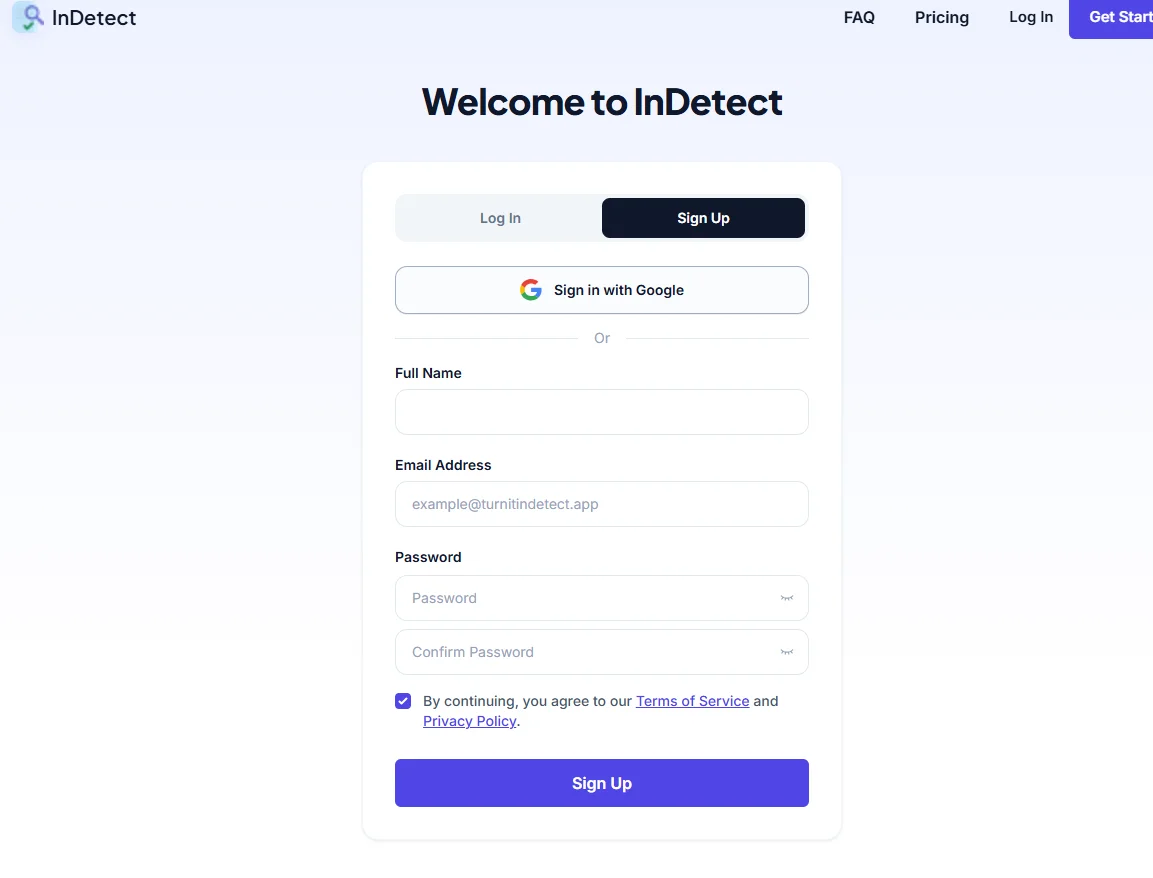
InDetect runs your paper through the actual Turnitin engine via authorized instructor accounts — one report, similarity and AI panel together — with zero repository storage, so your essay never enters the database and can't match itself when you submit through your school. Both file and report are deleted within 24 hours. Expect the report in 5–30 minutes; it's a queued document check, not an instant paste-box.
For the typical nursing workload — one flag-prone assignment at a time — the Lite plan at $9/month covers 2 checks, which works out to $4.50 per paper. U.S. students are on the eligibility list, so new users get one free check (availability depends on your country; international nursing students should go by the eligibility shown at signup, since some regions are paid-only). Longer clinical case studies with heavy appendices behave more like theses — our dissertation checking playbook covers splitting large files across the 20 MB limit.
6. If You Got Flagged: The Authorship Evidence Checklist
The flag is on the screen and the meeting is Friday. Build the stack, same principle that decided the contested AI cases in the courts and campuses we've covered:
Dated drafts, including the ugly first version nobody writes with a model.
Clinical notes from placement that connect your paper to real shift experience.
Annotated PDFs of the sources you actually read.
Google Docs version history, exported to PDF — edit trails show authorship over time.
An oral walkthrough. If you can explain your care plan's rationale chain out loud, in order, you wrote it. Practice before the meeting.
One screenshot loses to one number. A documented process doesn't.
7. FAQ: Nursing Papers, Turnitin, and AI Scores
Do nursing schools use Turnitin AI detection?
Many nursing programs run Turnitin with the AI writing report enabled, and several enforce program-specific AI policies stricter than campus defaults. Check your course syllabus and program handbook rather than assuming.
Why is my nursing paper's similarity so high?
Usually APA mechanics: verbatim definitions, quoted clinical standards, instrument wording, and a reference list that matches every other student's reference list. Ask whether your instructor's settings exclude quotes and bibliography before panicking at the number.
Can Turnitin tell if I wrote my reflection paper myself?
No. It estimates how statistically machine-like the text reads. Template-driven genres like Gibbs-cycle reflections — and the writing patterns of ESL and neurodivergent students — get flagged at higher rates even when the work is fully human.
What similarity score is acceptable for a nursing assignment?
There's no universal cutoff; instructors set their own expectations and read the source list, not just the percentage. Get the number before you submit and make sure every match is an attributed citation.
Can I check my nursing essay on Turnitin before submitting?
Yes, through a third-party service that runs the real engine through instructor accounts with zero repository storage, like InDetect. Eligible new users get one free check (availability depends on your country); Lite is $9/month for 2 checks. Reports take 5–30 minutes.
8. Know Your Two Numbers Before Your Instructor Does
Nursing writing will keep tripping detectors — the templates are the pedagogy. Your control is timing: run the real report before the deadline, fix what's fixable, keep the evidence trail for what isn't.
Claim the free check if you're in an eligible country, or start Lite at $9/month for 2 checks — $4.50 per essay is less than one clinical shift's parking. Submit knowing exactly what your instructor will see.