Turnitin Alternative for Students: 3 Real Options

Turnitin doesn't sell to students. It's licensed to institutions, and you only touch it by submitting through your school — after the deadline, with your professor holding the report. If you want a pre-submission check, there are exactly three routes: a third-party service that runs the real Turnitin engine through authorized instructor accounts, a standalone AI detector like GPTZero, or a free online tool like ZeroGPT. Only the first gives you the actual report your professor will see. The other two give you a predicted score from a different model — useful for a quick signal, not a substitute for the real number.
A note on authorship. This article is written by the team at InDetect, which operates a third-party pre-check service in Route 1 below. We are not affiliated with Turnitin, and we have a direct stake in the "real engine vs. simulator" distinction — so read the comparison tables as a participant's honest account, not a neutral one.
Key Takeaways
There is no student Turnitin account. The official platform offers institutional logins and demo requests only.
Route 1 (real-engine third-party checkers) is the only way to preview the exact similarity + AI report your professor will see.
Routes 2 and 3 (GPTZero, Originality.ai, ZeroGPT, GLTR) run their own models. Their scores are predictions from different math and won't match Turnitin's.
The database risk is real: an unknown checker that stores your paper can make your official submission match itself at 100%. Use a service with zero repository storage and a deletion guarantee.
A real pre-check costs between $1.17 and $4.50 per document on subscription — or $0 once, for eligible new users at InDetect.
1. Why Turnitin Doesn't Offer Accounts to Students
Look at turnitin.com's homepage and you'll find two doors: log in, and a demo request for institutions. No sign-up button, no pricing page, no student plan. That's not an oversight — Turnitin's entire revenue model is institutional licensing, sold to universities and publishers per enrolled student per year. Students interact with it only when an instructor creates a submission slot.
That design leaves a gap students feel every semester: you can't see your own report before you submit. Whether you even see a report after submitting depends on your instructor's settings. The gap is why an entire alternative market exists, and why "Turnitin alternative" searches split into three genuinely different products. Our comparison of nine checker tools grades them individually; below is the map.
2. Route 1 — Third-Party Checkers Using the Real Turnitin Engine
A small category of services solves the access problem structurally: they partner with instructors at licensed institutions, run your upload through those accounts configured for zero repository storage, and hand you the genuine Turnitin report — similarity and AI writing scores included. This is the only route where the pre-check and the professor's check are the same measurement, because they are literally the same engine.
InDetect is the service we operate, and it works exactly this way: authorized instructor accounts, no entry in Turnitin's student-paper database, paper and report deleted within 24 hours, results in 5–30 minutes. One free check for eligible new users (availability depends on your country); paid plans start at $9/month for 2 checks.
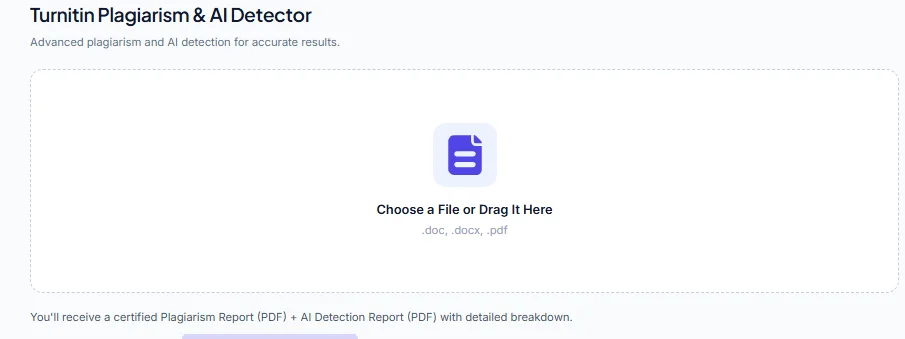
A warning inside the route: several sites in these search results are simulators wearing a Turnitin costume. aiturnitinchecker.ai is the clearest example — a paste box that returns a score in seconds. It runs Pangram, a respectable independent detector, but Pangram is not Turnitin, and the number it prints is a prediction. The paste-box-with-instant-answer format is the tell: real-engine checks accept file uploads, queue for minutes, and return a full report, not a bare percentage.
3. Route 2 — Standalone AI Detectors (GPTZero, Originality.ai)
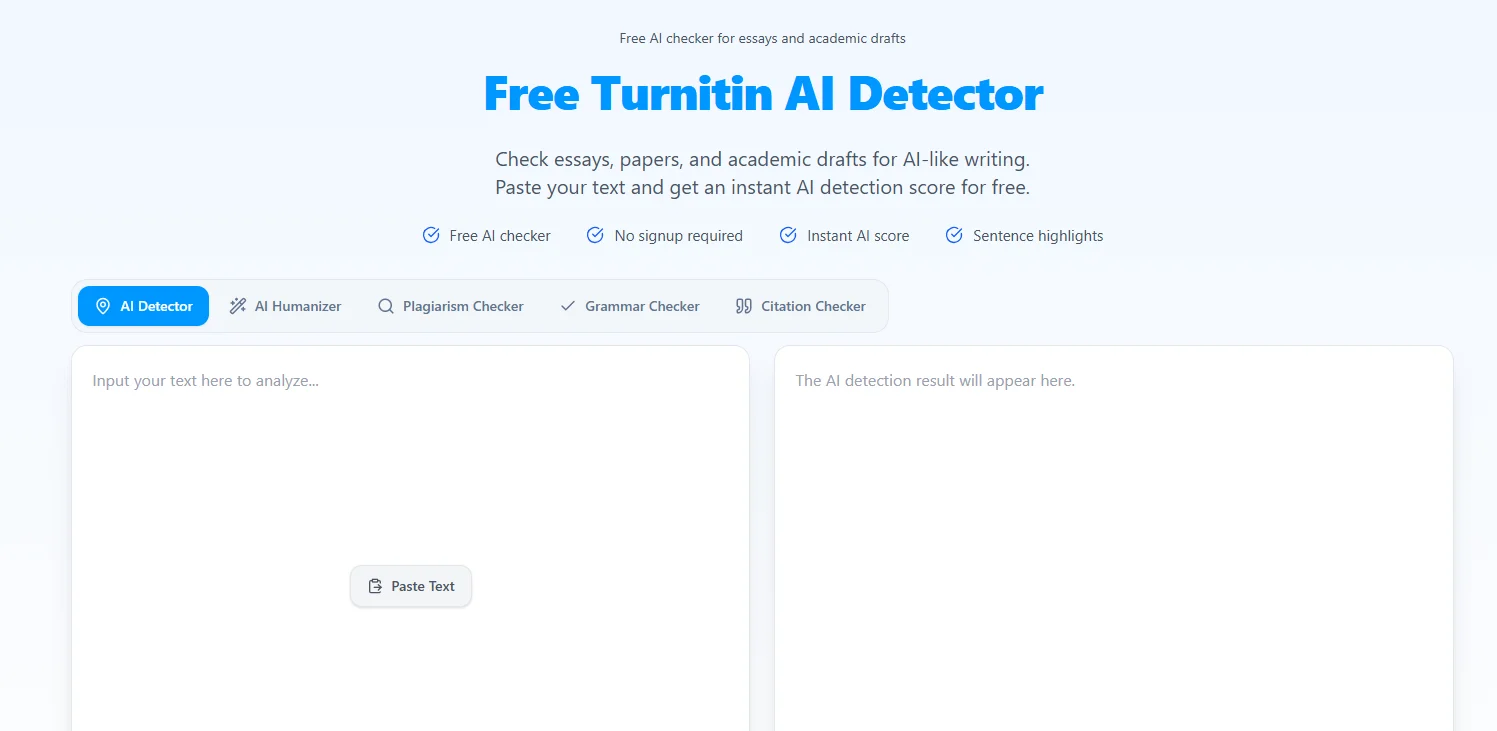
These are detectors with their own models, trained and tuned independently of Turnitin. GPTZero became the household name for students; Originality.ai targets publishers and content teams. Both give sentence-level probability scores in seconds, and both are honest that the score is theirs, not Turnitin's.
That honesty is the whole point. GPTZero vs. Turnitin isn't a matter of one being "more accurate" in the abstract — they measure different things with different training data and different thresholds, so the percentages don't convert. A paper at 5% on GPTZero can land at 30% on Turnitin, and the reverse happens too; our test of the real Turnitin engine against Gemini, ChatGPT, and Claude text shows how differently the engines score identical documents. Use Route 2 for cheap, fast self-checking while you draft. Don't use it as evidence in an integrity conversation.
4. Route 3 — Free Online Tools (ZeroGPT, GLTR)
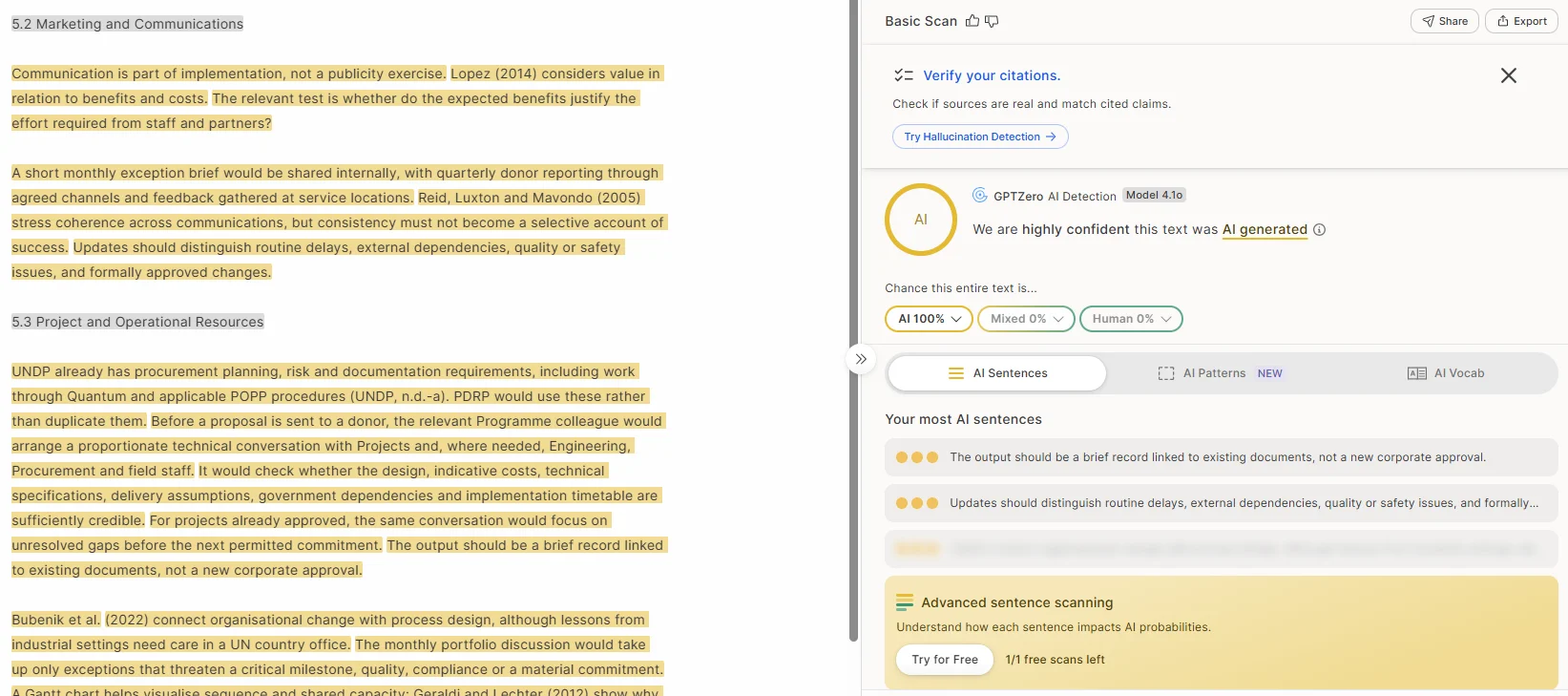
ZeroGPT gives you a free "AI Written / Not AI Written" classification on pasted text. GLTR — the Giant Language Model Test Room, hosted at gltr.io — colors each word by how predictable a language model found it: a teaching tool more than a checker, and the only option here that runs in your browser without ever seeing your file.
Both are genuinely free and fine for curiosity: get a feel for which sentences read machine-smooth, rewrite those. Both are also the weakest signal in this article. Their thresholds are looser, their models update slower, and neither produces anything shaped like a Turnitin report. If the stakes are a grade, treat a green light from Route 3 as a coin flip you haven't audited.
5. Comparison Table: Which Alternative Fits Your Situation
| Report authenticity | The actual Turnitin report | Own model, predicted score | Own model, rough signal |
|---|---|---|---|
| Matches professor's view | Yes | No | No |
| Paper stored in a database | Zero-repository if the service is set up right (verify) | No repository, but text may be retained — check ToS | Varies; assume retention on unknown sites |
| Cost | $1.17–$4.50/doc on subscription; 1 free for eligible users | Free tiers + paid plans | Free |
| Wait time | 5–30 minutes | Seconds | Seconds |
| Fits | Pre-submission check on graded work | Drafting hygiene, quick gut checks | Learning how AI text reads; zero-stakes drafts |
6. How to Choose Without Risking Your Paper
Work from the question you're actually asking. Need to know what your professor will see? Route 1, and only Route 1 — then confirm the service states zero repository storage and a deletion window, because a misconfigured checker that archives your paper turns your submission into a 100% self-match. That single failure mode is worse than any AI score. Our free-check walkthrough shows what a properly configured flow looks like, upload screen included.
Just want a cheap signal while drafting? Route 2. Want to understand why some sentences flag? Route 3. And when the real report lands in your lap, don't panic at a number — decode what the percentages and asterisks mean before you rewrite anything.
7. FAQ: Turnitin Alternatives for Students
Is there a free version of Turnitin for students?
No. Turnitin sells only institutional licenses and offers no student accounts or trials. The closest real thing is one free check per eligible new user at third-party services that run the actual Turnitin engine — at InDetect, availability depends on your country.
What is the difference between a real Turnitin report and a predicted score?
A real report comes from Turnitin's own model through an instructor account, with the same databases and scoring your school uses. A predicted score comes from a different detector (Pangram, GPTZero's model, etc.) styled to look like a Turnitin report. The numbers are not interchangeable.
Will a third-party Turnitin checker add my paper to a database?
A properly configured one won't: instructor accounts can disable repository storage, and InDetect runs zero storage with 24-hour deletion of paper and report. An unknown or careless checker might store your paper, which can make your official submission match itself. Verify the storage policy before uploading.
Can GPTZero tell me the AI score my professor will see?
No. GPTZero measures with its own model and thresholds. It's a useful drafting signal, but the score your professor sees comes from Turnitin's engine, and the two don't convert into each other.
How much does a real Turnitin pre-check cost for a student?
Through real-engine subscriptions, roughly $1.17–$4.50 per document depending on plan and volume — InDetect starts at $9/month for 2 checks. Eligible new users get one free. Anything claiming a real Turnitin report for under a dollar is a simulator.
8. Pick Your Route by the Stakes, Not the Search Results
The three routes answer three different questions. Free tools teach you how AI text reads; standalone detectors give a fast second opinion; only a real-engine check tells you the number that will actually be on your file. If a specific submission matters, spend the $4.50 — or claim the free check if you're eligible. Start at InDetect: one free real report for eligible new users, then Lite at $9/month for 2 checks.